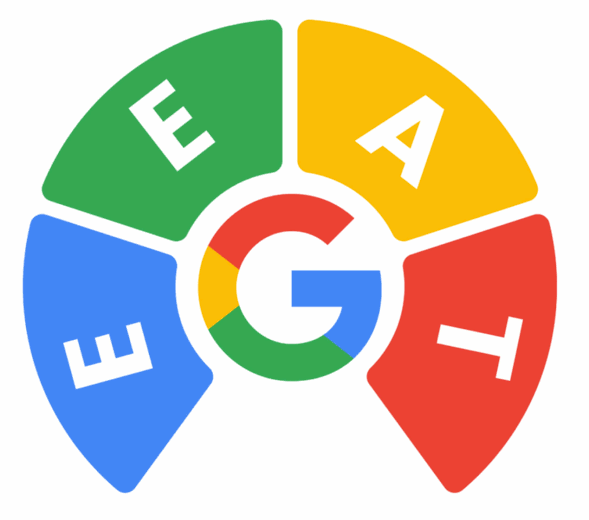
If you want your website to perform well in Google Search, publishing content is only part of the equation. Readers also need reasons to believe that your information is accurate, useful, and produced by people who understand the subject. This is where E-E-A-T comes in.
E-E-A-T stands for Experience, Expertise, Authoritativeness, and Trustworthiness. It is a framework discussed in Google’s Search Quality Rater Guidelines that helps explain what high-quality, reliable content looks like. Understanding these principles can help bloggers, publishers, businesses, and online stores build more credible websites.
In this guide, you will learn what each part of E-E-A-T means, whether it is a Google ranking factor, why it matters for SEO, and how to improve it with practical changes to your content and website.
1. What Is E-E-A-T?
E-E-A-T is short for Experience, Expertise, Authoritativeness, and Trustworthiness. Google uses this framework in its search quality guidance to describe important qualities of reliable, helpful content.
The extra “E” for Experience was added to the earlier E-A-T framework in December 2022. It highlights the value of first-hand involvement with a subject, such as using a product, visiting a destination, or carrying out a process being described.
Experience
Has the creator personally used, tested, observed, or experienced what they are discussing?
Expertise
Does the creator have relevant knowledge, skill, training, or demonstrated understanding?
Authoritativeness
Is the creator, publication, or organization recognized as a credible source on the topic?
Trustworthiness
Is the information accurate, transparent, safe to use, and supported by credible evidence?
These qualities overlap, but they are not interchangeable. A product reviewer may demonstrate experience through hands-on testing, while a medical researcher may demonstrate expertise through professional training and scientific knowledge. A well-known publication may have authority because other credible sources recognize its work.
Trust is particularly important. A page can appear knowledgeable yet still be unreliable if it contains misleading claims, hides commercial relationships, or misrepresents who created it.
2. Is E-E-A-T a Google Ranking Factor?
Google does not describe E-E-A-T itself as a single, specific ranking factor. Instead, its automated ranking systems use a variety of signals to identify helpful and reliable information. E-E-A-T is a framework for understanding the qualities those systems aim to recognize.
Google’s search quality raters use E-E-A-T concepts when evaluating search results and the quality of pages. Their ratings help Google assess how well its search systems are performing, but individual raters do not directly control the ranking of particular pages.
Why should website owners care?
E-E-A-T provides a useful way to evaluate whether your content deserves a reader’s confidence. It encourages you to ask questions that go beyond keyword placement:
- Does this article provide meaningful information or merely repeat what other websites say?
- Can readers understand who created the content and why they are qualified to discuss it?
- Are important claims supported by evidence?
- Does the website have a credible reputation in its subject area?
- Would a reader feel confident using the information to make a decision?
These questions are especially valuable when improving pages that influence purchases, health decisions, financial choices, or other significant matters.
For Google’s own explanation, see its guide to creating helpful, reliable, people-first content.
3. Experience: Demonstrate First-Hand Knowledge
Experience means that a content creator can offer a genuine perspective based on direct involvement with the subject. This can make an article more useful than a generic summary assembled from other sources.
Examples of experience in content
- A software reviewer explains how a tool performed during actual testing.
- A travel writer shares practical details from a real visit to a destination.
- A car owner describes fuel consumption observed during ordinary driving, with context about the conditions.
- A website administrator explains how a WordPress performance change affected loading time before and after implementation.
- An online seller documents a genuine return, delivery, or customer support process.
How to demonstrate experience on your website
Include details that show what was actually done, observed, or learned. When appropriate, use original photographs, screenshots, test results, notes, or examples that help readers understand the process.
For a product comparison, explain the products evaluated, the criteria used, and the limitations of the test. For a tutorial, include real steps and explain any issues a reader might encounter.
Avoid invented first-hand claims
Never claim to have tested a product, visited a location, interviewed a person, or used a service if that did not happen. If an article is based on research rather than personal experience, explain the research clearly instead of inventing a first-hand perspective.
Practical tip: Review your five most important articles and ask whether you can add an original example, a useful demonstration, a real comparison, or a specific observation that makes the information more valuable.
4. Expertise: Show You Understand the Topic
Expertise refers to the knowledge and skill needed to explain a subject accurately. The kind of expertise required depends on the topic and the risks associated with the information.
Some topics require formal professional qualifications. Others can be covered effectively by an experienced practitioner, knowledgeable enthusiast, researcher, or specialist writer who demonstrates a sound understanding of the subject.
Ways to demonstrate expertise
- Explain complex concepts accurately and in language your audience can understand.
- Use reliable sources for technical claims, statistics, and changing information.
- Provide meaningful examples rather than vague statements.
- Explain relevant limitations, exceptions, and uncertainties.
- Have qualified professionals review content when the subject requires it.
- Keep your knowledge current as products, regulations, research, or best practices change.
Create useful author profiles
An author profile can explain a contributor’s relevant background, areas of focus, professional experience, and published work. Link the byline to that profile where appropriate so readers can learn more about the person behind the article.
Credentials should be specific and verifiable. Do not use vague claims such as “leading expert” without supporting evidence, and never invent degrees, certifications, job titles, or professional memberships.
Expertise is more than a biography
An impressive author page cannot compensate for inaccurate or shallow content. The article itself should demonstrate sound reasoning, relevant knowledge, and a clear understanding of the reader’s needs.
6. Trustworthiness: Make Your Website Reliable
Trustworthiness is central to E-E-A-T. Readers need to know that the website is honest about its identity, careful with its claims, transparent about commercial interests, and reliable when handling information or transactions.
Make the publisher identifiable
Provide an accurate About page that explains the website’s purpose, who operates it, and what readers can expect. For a business website, include appropriate company details and accessible contact information.
Publish clear policies
Depending on the website, useful policies may include:
- Privacy policy and relevant data practices.
- Terms of service or terms of sale.
- Editorial standards and correction procedures.
- Affiliate disclosure and advertising policy.
- Returns, refunds, shipping, and customer support information for online stores.
These pages should reflect the website’s real practices and applicable legal obligations. A policy page does not establish trust if the business fails to follow it.
Verify claims and cite reliable sources
Check factual claims before publication, especially statistics, pricing, medical information, legal requirements, and financial recommendations. Prefer original research, official documentation, and recognized professional sources when they are appropriate.
When a claim depends on a particular date, location, product version, or set of assumptions, make that context clear. Correct mistakes when they are discovered.
Be transparent about advertising and affiliate links
If your website earns commissions, receives sponsorship payments, or publishes paid placements, disclose those relationships clearly where appropriate. Readers should be able to distinguish editorial recommendations from commercial arrangements.
Sponsored content should not misrepresent the advertiser, the publisher, or the nature of the relationship. Transparency protects reader confidence and helps establish the purpose of a recommendation.
Protect the user experience
Keep pages usable, secure, and easy to navigate. Avoid deceptive buttons, fake reviews, misleading claims, aggressive pop-ups, and page layouts that make it difficult to access the main content.
7. How to Improve E-E-A-T Step by Step
Improving E-E-A-T is an ongoing editorial and business process, not a one-time technical setting. Follow these steps to turn the framework into practical improvements.
Step 1: Review your most important pages
Start with pages that attract significant organic traffic, generate revenue or leads, or cover subjects where inaccurate information could cause harm. Review them for factual accuracy, depth, clarity, and reader usefulness.
Step 2: Identify who created the content
Add accurate bylines where readers would expect them. Link to author profiles that describe relevant knowledge and experience. If multiple people contributed, represent their roles honestly, such as author, editor, or professional reviewer.
Step 3: Add original evidence
Replace generic statements with relevant demonstrations, examples, observations, original research, or properly explained comparisons. Include evidence of testing when you make claims about products or services.
Step 4: Strengthen research and fact-checking
Check claims against reliable sources and record when important information was verified. For topics that change frequently, such as software pricing or regulations, establish a review schedule.
Step 5: Improve transparency
Make your About, Contact, editorial, privacy, and commercial disclosure information accurate and accessible where relevant. Ensure that the content reflects the actual business and editorial practices.
Step 6: Build a focused content strategy
Develop a useful collection of related resources for your intended audience. Update older content when it needs improvement, merge overlapping pages when appropriate, and avoid publishing unrelated material simply because it appears to have search demand.
Step 7: Earn recognition naturally
Create resources that other people may want to reference, such as original data, practical tools, detailed tutorials, or well-researched explanations. Promote them to relevant audiences and build legitimate professional relationships.
Step 8: Measure quality and outcomes
Use Search Console and analytics to track search visibility, organic traffic, engagement, and meaningful conversions. These metrics can help identify opportunities, but they are not direct E-E-A-T scores. Evaluate content quality and user feedback alongside traffic data.
8. E-E-A-T and AI-Generated Content
AI tools can help with research organization, outlining, drafting, editing, and brainstorming. Using AI does not automatically mean content lacks quality, but the finished page still needs to be accurate, useful, and appropriate for its audience.
The main risk is publishing material that sounds plausible but contains errors, repeats existing content without adding value, or makes unsupported claims about experience and expertise.
How to use AI responsibly
- Verify factual statements against reliable sources.
- Have a knowledgeable person review material that requires specialist judgment.
- Add original analysis, examples, research, or first-hand observations where possible.
- Remove repetitive paragraphs and generic filler.
- Never invent authors, qualifications, interviews, tests, or customer testimonials.
- Explain the role of automation when that information would reasonably help readers understand how the content was produced.
- Ensure the article serves a genuine audience rather than existing solely to attract search traffic.
Should every AI-assisted article disclose AI use?
There is no universal requirement to add an AI disclaimer to every page. Consider whether readers would reasonably expect to know how the content was produced, particularly where the method affects their ability to assess its reliability. Be transparent when appropriate, and follow any applicable legal or industry requirements.
Google’s guidance focuses on the purpose and quality of the content, including whether it is helpful, original, reliable, and created for people. Producing large amounts of unoriginal content primarily to manipulate search rankings can violate spam policies regardless of the method used to create it.
9. E-E-A-T for YMYL Websites
YMYL stands for “Your Money or Your Life.” It describes topics where misleading information could significantly affect a person’s health, financial stability, safety, or well-being.
Examples may include medical advice, personal finance, legal rights, emergency information, and other high-impact subjects. The level of scrutiny appropriate for a page depends on its specific topic and potential consequences.
| Website type | Practical trust measures |
|---|---|
| Health and medical | Use reliable medical sources, accurate explanations, appropriate professional review, and clear limits on general information. |
| Finance | Verify figures, explain assumptions and risks, disclose relevant commercial relationships, and use qualified reviewers when needed. |
| Legal information | Use current official legal sources, identify relevant jurisdictions, and avoid presenting general information as individualized legal advice. |
| E-commerce | Provide accurate product descriptions, genuine reviews, clear prices, delivery information, and accessible return and support policies. |
| Technology reviews | Explain testing methods, version details, limitations, pricing dates, and any sponsorship or affiliate relationships. |
| Travel publishing | Verify opening hours, prices, entry rules, and transport details; distinguish personal experience from information obtained through research. |
For high-impact topics, professional qualifications and expert review can be especially important. Do not imply that a general content writer has medical, financial, or legal credentials they do not possess.
10. Tools to Support E-E-A-T Improvements
No tool can produce a definitive E-E-A-T score. However, several tools can help you check facts, review content, monitor performance, and improve the credibility of your publishing process.
| Tool or resource | How it helps | Cost |
|---|---|---|
| Google Search Console | Reviews search queries, impressions, clicks, and indexing issues. | Free |
| Google Analytics | Measures site engagement, landing-page performance, and conversions. | Free standard version |
| Google Helpful Content Guidance | Provides questions for evaluating content usefulness, trust, and authorship. | Free |
| Google Spam Policies | Explains practices that can violate Google’s search spam policies. | Free |
| PageSpeed Insights | Checks page performance and available Core Web Vitals data. | Free |
| Schema Markup Validator | Helps validate structured data used on web pages. | Free |
Use these tools as part of a wider review. Search metrics cannot tell you everything about factual accuracy, author competence, business honesty, or the real value a page provides to its audience.
11. Common E-E-A-T Mistakes to Avoid
Many websites try to improve perceived credibility through superficial changes while leaving deeper quality problems unresolved. Avoid the following mistakes:
- Inventing author credentials: Never create fake experts, qualifications, biographies, or professional affiliations.
- Adding a biography without improving the content: An author page does not make inaccurate or shallow information reliable.
- Buying irrelevant backlinks: Link volume does not establish genuine authority, and manipulative link schemes can violate spam policies.
- Publishing unsupported claims: Important statistics and factual statements should be verifiable.
- Creating fake product reviews: Do not claim to have tested items or used services when you have not.
- Mass-producing generic articles: Large quantities of repetitive pages can fail to provide meaningful value.
- Hiding paid relationships: Disclose relevant sponsorships and affiliate relationships clearly.
- Using a fake E-E-A-T score: No third-party score can conclusively measure Google’s assessment of a page’s trustworthiness.
- Changing publication dates without meaningful updates: Keep dates accurate and make substantial improvements when an article needs refreshing.
- Ignoring reader needs: Content that exists only to target keywords may not provide a satisfying answer.
The best improvements are genuine: accurate information, real experience, appropriate expertise, a transparent publisher, and a strong commitment to the audience.
12. Interactive E-E-A-T Checklist
Use this checklist to review an article or important website page. Check each item only when you have verified that it is complete and accurate.
This checklist is a practical review tool, not an official Google score or ranking formula.
Frequently Asked Questions About E-E-A-T
What does E-E-A-T stand for in SEO?
E-E-A-T stands for Experience, Expertise, Authoritativeness, and Trustworthiness. It is a framework in Google’s quality guidance for evaluating the qualities of helpful and reliable content.
Is E-E-A-T a direct Google ranking factor?
Google says E-E-A-T itself is not a specific ranking factor. Its automated systems use multiple signals to identify helpful and reliable information. E-E-A-T helps explain the qualities those systems aim to recognize.
How can I improve E-E-A-T quickly?
Start with your most important pages. Correct inaccurate information, cite reliable sources, identify authors honestly, add original evidence where possible, improve transparency, and make sure the content genuinely answers the reader’s question.
Does E-E-A-T matter for small websites?
Yes. Small websites can demonstrate credibility through accurate information, genuine experience, clear authorship, transparent business details, and useful content. A large brand or a long author biography is not a substitute for quality.
Can a new website demonstrate authority?
A new website can begin building credibility by publishing accurate, useful work, showing relevant expertise, and providing transparent information about its publisher. Broader recognition and reputation may take time to develop.
Do author bios improve E-E-A-T?
Accurate author biographies help readers understand who created a page and what relevant background they have. They can support transparency, but a biography alone does not guarantee better rankings or make weak content reliable.
Can AI-written content have good E-E-A-T?
AI-assisted content can be useful when it is accurate, original, and produced with appropriate review. The key concerns are the quality and purpose of the content, whether claims are verified, and whether the page genuinely benefits readers.
Do backlinks improve E-E-A-T?
Relevant editorial backlinks can help people discover your content and may contribute to search systems’ understanding of pages and websites. However, E-E-A-T is not a backlink score, and manipulative link building can violate Google’s policies.
How long does it take to improve E-E-A-T?
Some improvements, such as correcting errors or clarifying authorship, can be made immediately. Building a broader reputation, earning genuine references, and demonstrating a sustained record of reliable publishing generally take longer. There is no fixed timeline for ranking changes.
Is E-E-A-T more important for health and finance websites?
Google places particular emphasis on strong E-E-A-T for topics that can significantly affect health, financial stability, safety, or well-being. All websites should aim for trustworthy content, but high-impact topics require especially careful accuracy and appropriate expertise.
Conclusion: Make Credibility Part of Your SEO Strategy
E-E-A-T provides a practical framework for producing content that readers can trust. Experience helps demonstrate first-hand knowledge, expertise shows subject understanding, authoritativeness reflects recognition, and trustworthiness makes the information and publisher reliable.
To improve E-E-A-T, focus on the fundamentals: publish useful and accurate content, represent authors and credentials honestly, cite reliable sources, demonstrate genuine experience when available, disclose commercial relationships, and maintain transparent business practices.
There is no guaranteed E-E-A-T score or shortcut to better rankings. The strongest long-term approach is to build a website that consistently deserves its audience’s confidence—and to keep improving it as readers’ needs and information change.