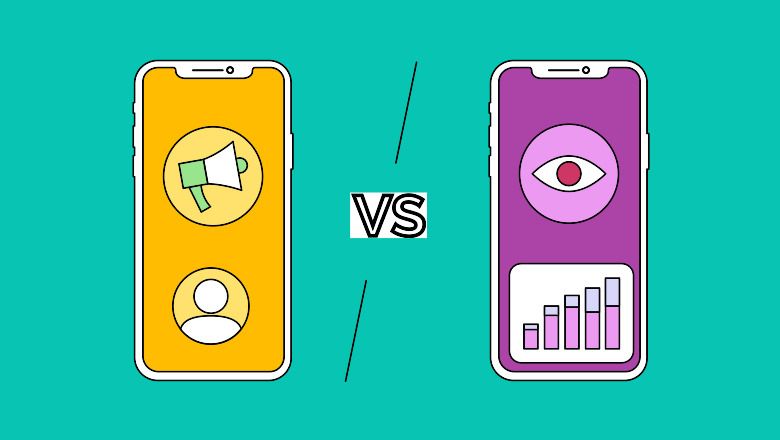
Instagram reach and impressions are two metrics used to understand how many people encounter your content and how often it is displayed. Although marketers have traditionally compared both metrics, Instagram has increasingly moved toward using Views as its primary content-consumption metric.
Understanding the difference helps you evaluate whether a post is reaching new audiences, generating repeat exposure, or encouraging people to interact with your brand. This guide explains the definitions, provides real-world examples, and shows you how to calculate the relationship between reach and views.
What Is Instagram Reach?
Instagram reach is the number of unique accounts that saw a post, Reel, Story, or other piece of content at least once during the reporting period. Each account is counted once for that content, even if it sees the content several times.
For example, imagine your Instagram carousel appears to 2,000 different accounts. Some of those people might see it again later, but your reach for that content remains 2,000 unique accounts.
Reach helps answer questions such as:
- How many unique accounts did this post reach?
- Is my content reaching people beyond my existing followers?
- Which topics or formats attract a wider audience?
- Did a campaign expand brand awareness?
Reach is particularly useful when your goal is to increase visibility, introduce your brand to new people, or evaluate the distribution of a post.
What Were Instagram Impressions?
Instagram impressions traditionally measured the total number of times content was displayed, including multiple displays to the same account. If one person saw a post three times, that could contribute three impressions but only one account reached.
For example, if 2,000 accounts each see your post twice, the post could generate 2,000 reach and 4,000 impressions under the traditional definitions.
Impressions helped marketers understand repeated exposure. However, the terminology and reporting have changed. Instagram has shifted many insights experiences toward Views, replacing impressions and plays in several reports. If you are looking at older reports or third-party analytics, you may still see the term “impressions.”
Instagram Reach vs. Impressions vs. Views
| Metric | What It Measures | What It Helps You Understand |
|---|---|---|
| Reach | Unique accounts that saw your content at least once | Audience size and distribution |
| Impressions | Historically, total content displays, including repeat displays | Frequency of exposure under the older metric definition |
| Views | Content view or play activity as reported by Instagram’s current metrics | How often content is viewed or played |
| Engagements | Actions such as likes, comments, saves, and shares | How people respond to your content |
Views and impressions are related concepts, but they should not automatically be treated as identical across every content format, reporting tool, or time period. Always check the metric definition used by the analytics source you are viewing.
A Simple Example: How Reach and Impressions Differ
Imagine you publish an Instagram Reel about a new product. Over several days, the same people may encounter it more than once.
Unique reach
5,000
Five thousand distinct accounts saw the Reel.
Total views
8,000
The content generated eight thousand recorded views.
Engagements
600
The Reel received 600 counted interactions.
In this example, views exceed reach by 3,000. That difference suggests the content generated more total viewing activity than unique accounts reached. However, the difference alone does not tell you exactly how many people replayed the Reel or how many times each person watched it.
For reliable reporting, use the metric definitions provided by the platform and avoid assuming that every view beyond reach represents a replay by a unique person.
Free Reach and Views Calculator
Use this calculator to compare reach with views or legacy impressions. Enter the numbers from the same post and reporting period. It calculates the views-to-reach ratio and the difference between the two figures.
Views-to-reach ratio
Difference: 3,000 views above reach.
Engagements ÷ reach: 12.00%.
Compare similar content using the same metrics and reporting period.
This is a mathematical comparison, not a measurement of unique people who watched more than once. A ratio above 1 does not reveal individual viewing behavior.
How to Calculate Reach Rate
Reach rate expresses reach as a percentage of your follower count. It can help you understand how much of your existing audience a post reached, although a post can also reach accounts that do not follow you.
Example: Your account has 10,000 followers and a post reaches 2,500 accounts.
The post’s reach is equivalent to 25% of your follower count. This does not mean that exactly 25% of your followers saw the post, because reach can include non-followers and the denominator is your total follower count.
How to Calculate Engagement Rate by Reach
Reach tells you how many unique accounts encountered the content. Engagement rate by reach adds context by measuring interactions relative to those accounts reached.
Example: A post receives 300 likes, 40 comments, 50 saves, and 10 shares. Its reach is 5,000 accounts.
This is an engagement rate of 8% using the specified actions and reach denominator. Because one account can take multiple actions, it does not necessarily mean that 8% of unique reached accounts engaged.
Which Metric Is More Important: Reach or Impressions?
Neither metric is universally better. The right choice depends on your marketing objective and the content you’re measuring.
Choose reach for awareness
Reach is useful when you want to introduce your brand to more unique accounts, expand your audience, or compare the distribution of posts.
Use views for consumption
Views help you evaluate how often people watch or view content under Instagram’s current reporting definitions.
Use engagement for response
Likes, comments, saves, shares, and other actions help reveal whether people respond to the content.
Use conversions for business results
Link clicks, inquiries, purchases, and registrations show whether content supports your business objectives.
What Does It Mean When Views Are Much Higher Than Reach?
When a post’s views are substantially higher than its reach, it has generated more recorded viewing activity than unique accounts reached. This may be consistent with repeat viewing or multiple viewing opportunities, depending on how the metric is defined.
For video content, repeated plays can be part of the explanation. But you should not automatically conclude that every additional view represents a replay by the same account. The metric may be affected by the content format, reporting definitions, and how the platform counts views.
To interpret the difference, also examine:
- Watch time: How long people spend watching a video, where available.
- Shares and saves: Whether people found the content useful or worth passing on.
- Engagement rate: Whether the content encouraged interaction relative to reach or another denominator.
- Profile visits and clicks: Whether exposure led people to explore your brand.
- Conversions: Whether the content contributed to sales, leads, or other important actions.
How to Find Reach and Views in Instagram Insights
Instagram’s analytics interface and available metrics can change over time. Professional accounts generally have access to Insights, but exact options can vary by account type, content format, app version, and reporting tool.
- Open Instagram and navigate to your professional dashboard or Insights.
- Select the post, Reel, Story, or date range you want to analyze.
- Look for Accounts Reached, Reach, Views, or the relevant content-performance metrics available in that report.
- Record reach and views from the same content and reporting period.
- Compare results with other posts of similar format and purpose.
- Use engagement and conversion metrics to understand whether visibility translated into action.
If you are reviewing historical reports or exporting data from a third-party analytics platform, you may still encounter the term impressions. Make a note of the reporting period and metric definitions so you don’t compare incompatible data.
How to Improve Instagram Reach
If your goal is to reach more unique accounts, focus on creating content that your intended audience finds useful, entertaining, or worth sharing. No individual tactic guarantees broader distribution, but the following practices give you a more systematic approach.
1. Create Content for a Specific Audience
Address a clear question, problem, interest, or need. A focused tutorial or relevant product demonstration is easier for the intended audience to recognize as useful than a generic post.
2. Experiment With Reels and Carousels
Different formats may suit different topics. Test Reels for demonstrations and storytelling, and carousels for step-by-step explanations or reference material. Compare similar topics across formats rather than assuming one format always wins.
3. Encourage Genuine Sharing and Saving
Useful checklists, practical advice, original insights, and clear explanations can give people a reason to save or share your content. Focus on usefulness instead of asking for engagement without a clear reason.
4. Review Your Posting Schedule
Use your audience activity data to choose starting times, then compare performance over several weeks. Timing can support distribution, but it cannot replace relevant content and a consistent strategy.
5. Use Relevant Captions and Keywords
Write captions that explain the content clearly and use relevant terms naturally. Add hashtags only when they help describe the post or connect it with a relevant topic or community.
6. Track Non-Follower Reach
Where Instagram provides a breakdown of followers and non-followers, examine whether your posts are reaching beyond your existing audience. Compare the formats and topics that consistently introduce your account to new people.
How to Improve Content Views
Improving views requires attention to the content format and the way people consume it. For Reels and other videos, make the opening clear, remove unnecessary delays, and deliver on the promise of the video.
- Start with a clear idea or relevant visual.
- Keep the video focused on one main point.
- Use readable on-screen text when it helps comprehension.
- Review watch-time and retention metrics where available.
- Compare views with reach instead of interpreting either metric in isolation.
- Replicate successful topics thoughtfully rather than reposting the same content without improvement.
Common Mistakes When Comparing Reach and Impressions
- Assuming reach and views are interchangeable: Reach measures unique accounts, while views measure content-viewing activity under Instagram’s current metric definitions.
- Assuming every extra view is a replay: A ratio alone cannot reveal how many times each person viewed the content.
- Mixing old and new metrics without checking definitions: Instagram’s reporting terminology has changed, so historical impressions may not be directly comparable to current views.
- Comparing different date ranges: Use the same reporting window and similar content types.
- Ignoring engagement: Visibility does not automatically mean people found the content valuable or took action.
- Judging success by one post: Look for patterns across several comparable posts before changing your strategy.
- Confusing reach with follower count: Reach may include non-followers, so it can be higher or lower than your current follower count.
Frequently Asked Questions
What is the main difference between Instagram reach and impressions?
Reach measures unique accounts that saw your content. Impressions traditionally counted total content displays, including repeat exposure. Instagram has shifted many reporting experiences toward Views, so the terminology depends on the metric and tool you use.
Are impressions still available on Instagram?
Instagram has transitioned many Insights reports from impressions and plays to Views. However, the term impressions may still appear in older reports, third-party tools, or advertising and analytics contexts. Check the metric definition and reporting period before comparing figures.
Are Instagram views the same as impressions?
They are related but should not automatically be treated as identical in every context. Instagram has adopted Views as a more unified content-consumption metric, while historical impressions referred to total displays. Definitions can vary by format and reporting tool.
Can reach be higher than views?
Reach and views measure different things, and their relationship depends on the metric definitions and content format. Do not assume one must always be greater than the other when comparing reports from different sources or formats.
Why are my Instagram views higher than my reach?
Views can exceed reach because viewing activity can include repeat exposure or repeated viewing, depending on the format and measurement definition. The difference alone does not tell you exactly how many people replayed the content.
Which metric should businesses track?
Use reach for unique audience distribution, views for content consumption, engagement for audience response, and clicks or conversions for business outcomes. The most useful combination depends on your campaign objective.
How do I calculate Instagram reach rate?
Divide reach by follower count and multiply by 100. For example, 2,500 reach divided by 10,000 followers equals a reach rate of 25%. Reach may include non-followers, so this is a comparison against follower count, not a precise percentage of followers reached.
Do reach and views include paid content?
Depending on the report, metrics may include organic content, paid promotion, or both. Check whether your report is showing organic, paid, or total results before making comparisons.
Does a high reach guarantee more sales?
No. High reach indicates broad distribution, but sales also depend on audience relevance, the offer, the landing page, and other factors. Track link clicks, inquiries, and conversions to evaluate business impact.
Sources and Further Reading
- Sprout Social: Reach vs. Impressions vs. Engagement (2026) — current definitions and comparisons of reach, impressions, and engagement.
- Sprout Social: How to Track Instagram Impressions in 2026 — explains Instagram’s transition from impressions to Views.
- Hootsuite: Reach vs. Impressions — background on the traditional distinction and how to interpret the metrics.
- Hootsuite: Instagram Metrics to Track in 2026 — additional metrics for evaluating Instagram performance.
Final Thoughts
Instagram reach and impressions have traditionally measured two different aspects of visibility: the number of unique accounts exposed to content and the total number of displays. Instagram’s move toward Views means marketers also need to understand the current metric labels used in their Insights reports.
For the clearest picture of performance, use reach to evaluate audience distribution, views to understand content consumption, engagement metrics to measure response, and conversions to assess business results. Comparing these measures together is more useful than relying on any single number.