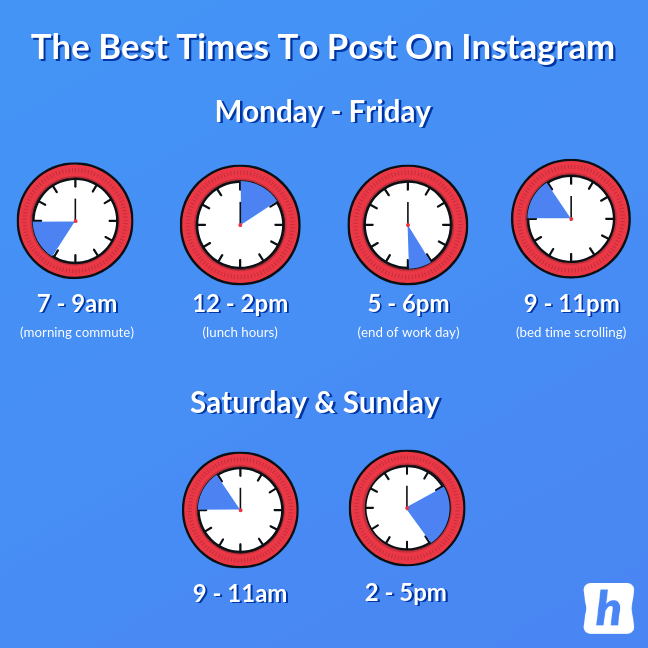
The best time to post on Instagram depends on your industry, target audience, content format, and the time zone your followers live in. A retail brand may get better results from morning browsing hours, while a restaurant might attract more attention around lunchtime.
Instead of relying on one universal posting time, businesses can use industry benchmarks to choose a starting schedule and then refine it with Instagram Insights. This guide covers suggested posting windows for retail, food, travel, finance, healthcare, education, technology, and other industries.
Best Times to Post on Instagram by Industry: Quick Reference
The table below combines practical industry-specific starting points with patterns reported in 2026 social media studies. All times are local to your target audience. These are test windows, not guaranteed peak times for every account.
| Industry | Suggested Times to Test | Days to Test First | Content Ideas |
|---|---|---|---|
| Retail and e-commerce | 7–11 a.m.; 5–7 p.m. | Monday, Tuesday, Thursday | Product demos, launches, offers |
| Food and restaurants | 10 a.m.–1 p.m.; 5–7 p.m. | Monday–Friday | Menus, specials, behind-the-scenes |
| Travel and hospitality | 10 a.m.–3 p.m. | Monday–Wednesday | Destinations, itineraries, hotel tours |
| Financial services | 11 a.m.–2 p.m.; 2–4 p.m. | Tuesday–Friday | Money tips, explainers, market updates |
| Healthcare and wellness | 9 a.m.–12 p.m.; 1–3 p.m. | Monday, Thursday | Educational posts, wellness tips |
| Beauty and fashion | 11 a.m.–1 p.m.; 6–8 p.m. | Wednesday–Saturday | Tutorials, outfits, product routines |
| Technology and software | 10 a.m.–3 p.m. | Tuesday–Thursday | Product walkthroughs, feature demos |
| Marketing agencies | 9–11 a.m. | Monday, Friday | Case studies, campaign advice |
| Education | 11 a.m.; 4–8 p.m. | Tuesday, Wednesday | Study tips, course information |
| Media and entertainment | 1–5 p.m.; early evening | Tuesday, Wednesday, Friday | Clips, announcements, recaps |
| Nonprofits and community organizations | 10 a.m.–1 p.m.; 2–5 p.m. | Wednesday, Thursday | Impact stories, campaigns, events |
| B2B and professional services | 9–11 a.m.; 1–3 p.m. | Tuesday–Thursday | Expert insights, team stories |
| Construction and manufacturing | 2–6 p.m. | Tuesday–Thursday | Project updates, equipment demos |
These suggested ranges are intended for testing and are not a single standardized dataset. Industry-specific findings differ between research providers, sample sizes, audiences, and engagement metrics.
1. Best Time to Post on Instagram for Retail and E-Commerce
Retail and e-commerce brands can test morning hours when users check their phones before work and early evening when they browse products after their daily activities. Product discovery, seasonal shopping, and promotional campaigns can also change the best time to publish.
Morning test
7–11 a.m.
Try product announcements, new arrivals, and short demonstrations.
Evening test
5–7 p.m.
Test shopping guides, comparisons, and limited-time promotions.
Use product tags where available, clear calls to action, and landing pages that match the post. Track saves, shares, profile visits, product clicks, and conversions rather than judging success by likes alone.
2. Best Time to Post on Instagram for Restaurants and Food Businesses
Restaurants, cafes, food delivery businesses, and food creators should test publishing before people make meal decisions. Lunch-related content can work before midday, while dinner specials may be worth testing in the late afternoon.
- 10 a.m.–1 p.m.: Lunch menus, daily specials, and nearby dining options.
- 4–7 p.m.: Dinner promotions, reservation reminders, and food delivery offers.
- Weekend mornings: Brunch menus and special-event announcements.
Use location tags and make opening hours, booking instructions, or delivery details easy to find. A local restaurant should schedule posts according to the habits of nearby customers rather than a global average.
3. Best Time to Post on Instagram for Travel and Hospitality
Travel companies, hotels, tour operators, and destination accounts can test late morning and lunchtime, when people may have time to research future trips. However, travel inspiration is often saved for later, so a post’s long-term performance matters as well as its first-hour engagement.
- 10 a.m.–noon: Destination guides, hotel room tours, and itinerary ideas.
- Noon–3 p.m.: Travel deals, seasonal offers, and carousel guides.
- Early evening: Reels featuring scenery, experiences, or trip highlights.
For a hotel or tour business, compare saves, shares, website visits, inquiries, and bookings. If most potential customers live overseas, test posting times that suit their time zone rather than your own.
4. Best Time to Post on Instagram for Financial Services
Financial advisors, fintech companies, insurance providers, and personal finance creators can test weekday hours when audiences are taking breaks or checking updates. Educational content often benefits from clear, useful explanations rather than urgency alone.
- 11 a.m.–2 p.m.: Personal finance explainers and budgeting tips.
- 2–4 p.m.: Financial education, service explainers, and business updates.
- Tuesday–Thursday: Useful starting days for testing consistent weekday performance.
For financial content, make claims accurate and transparent. Avoid misleading promises about returns or outcomes, and measure qualified inquiries or useful website visits alongside engagement.
5. Best Time to Post on Instagram for Healthcare and Wellness
Healthcare providers, fitness professionals, wellness brands, and health educators can experiment with morning and midday publishing. The best window depends on whether the audience consists of patients, busy professionals, parents, gym members, or healthcare workers.
- 9 a.m.–noon: Educational carousels, appointment reminders, and health FAQs.
- 1–3 p.m.: Explainer videos and myth-versus-fact content.
- Early morning or early evening: Fitness routines and habit-building content.
Keep health claims evidence-based and protect patient privacy. Use the times your audience is active as a distribution guide, not as a substitute for useful and trustworthy content.
6. Best Time to Post on Instagram for Beauty and Fashion
Beauty and fashion audiences often discover products through tutorials, outfit inspiration, reviews, and creator content. Test late morning and early evening to see when followers have time to watch, save, and share posts.
- 11 a.m.–1 p.m.: Makeup tutorials, skincare tips, and product comparisons.
- 6–8 p.m.: Outfit ideas, styling Reels, and evening beauty routines.
- Thursday and Saturday: Test these days for weekend looks and event-related inspiration.
Launch timing may matter more than a general benchmark. Compare content about new products with evergreen tutorials to see which topics work best at each hour.
7. Best Time to Post on Instagram for Technology and Software
Software companies, technology brands, app developers, and IT service providers can start by testing weekday business hours. Followers may be more receptive to product education during breaks in their workday than late at night.
- 10 a.m.–noon: Feature demos, quick tutorials, and product tips.
- 1–3 p.m.: Customer stories, use cases, and comparison content.
- Tuesday–Thursday: Useful days for establishing a repeatable test schedule.
For B2B software, consider the roles and locations of decision-makers. For consumer apps, evening or weekend testing may be more appropriate if users typically explore apps outside working hours.
8. Best Time to Post on Instagram for Marketing Agencies
Marketing agencies and social media consultants can test weekday mornings, when other professionals may be planning campaigns or catching up on industry news. Useful content tends to outperform vague promotional messages when it solves a specific problem.
- 9–11 a.m.: SEO tips, campaign breakdowns, and short marketing lessons.
- Early afternoon: Client results, case studies, and service explainers.
Track profile visits, qualified direct messages, consultation requests, and website leads. A post that generates fewer likes but more relevant inquiries may be more valuable to an agency.
9. Best Time to Post on Instagram for Education
Schools, universities, online course providers, tutors, and educational creators should account for the age and schedule of their audience. Students may browse after classes, while parents and working professionals may engage at different times.
- 11 a.m.–1 p.m.: Study tips, campus updates, and course information.
- 4–8 p.m.: Learning resources, enrollment reminders, and tutorial Reels.
- Tuesday and Wednesday: Good starting days for testing weekday engagement.
Use different posting tests for student-focused content and parent-focused announcements. Compare link clicks, information requests, and registrations when these are your goals.
10. Best Time to Post on Instagram for Media and Entertainment
Entertainment publishers, musicians, video creators, and media brands can test midday and early evening slots when audiences have time to watch clips and share content. The timing of a major announcement or live event may override a standard weekly schedule.
- Early morning: Headlines, short updates, and daily recaps.
- 1–5 p.m.: Clips, previews, and entertainment recommendations.
- Early evening: Reels, episode reminders, and event-related content.
Monitor shares, watch time, retention, and repeat views. Breaking news and event-based posts should be published when relevant instead of waiting for a benchmark time.
11. Best Time to Post on Instagram for Nonprofits
Nonprofits and community organizations can start with weekday late mornings and afternoons. Campaigns often depend on a specific audience, fundraising calendar, volunteer availability, and the urgency of the message.
- 10 a.m.–1 p.m.: Community stories and impact updates.
- 2–5 p.m.: Volunteer calls, event information, and fundraising campaigns.
- Wednesday and Thursday: Starting days to compare for consistent weekday reach.
Measure meaningful actions such as donations, volunteer registrations, event sign-ups, and shares—not just reactions.
12. Best Time to Post on Instagram for B2B and Professional Services
Consultants, accountants, law firms, recruiters, and other professional service providers can test weekday mornings and early afternoons. Their audiences may check Instagram during breaks even if the service itself is usually researched on other platforms.
- 9–11 a.m.: Practical advice, professional insights, and short explainers.
- 1–3 p.m.: Case studies, team introductions, and service information.
- Tuesday–Thursday: Begin with midweek tests before expanding to other days.
Use Instagram to build awareness and trust, then track whether posts lead to profile visits, website traffic, inquiries, or qualified leads.
13. Best Time to Post on Instagram for Construction and Manufacturing
Construction companies, manufacturers, and industrial suppliers can test late afternoon on weekdays. Project updates, equipment demonstrations, and workplace videos may appeal to customers and professionals who browse during breaks or after their shifts.
- 2–6 p.m.: Project progress, product demonstrations, and team updates.
- Tuesday–Thursday: Initial days for comparing performance.
For a niche B2B audience, a smaller number of highly relevant interactions may be more useful than a large volume of general engagement.
Best Days to Post on Instagram in 2026
Several major studies identify midweek as a strong starting point, but they do not agree on one exact best hour. Buffer’s September 2026 analysis of 9.6 million Instagram posts identifies Thursday at 9 a.m., Wednesday at noon, and Wednesday at 6 p.m. among its top slots. Sprout Social’s 2026 analysis highlights weekday afternoon and evening windows, especially Tuesday through Thursday.
| Day | Starting Window to Test | How to Use It |
|---|---|---|
| Monday | Late morning or afternoon | Educational posts and weekly announcements |
| Tuesday | Late morning to early evening | Product posts, professional content, and promotions |
| Wednesday | Noon or early evening | Compare two distinct windows for your top content |
| Thursday | Morning or lunchtime | Test launches, tutorials, and offers |
| Friday | Late afternoon or evening | Weekend plans, entertainment, and lifestyle content |
| Saturday | Late morning or evening | Lifestyle, fashion, food, and event content |
| Sunday | Midday or early evening | Travel inspiration, recaps, and planning content |
Use these windows as experiments rather than strict rules. If your audience is most active on Saturday, there is no reason to avoid Saturday just because an industry-wide report ranks weekends lower overall.
Interactive Tool: Find a Starting Posting Schedule
Choose your industry and main goal to generate a suggested starting schedule. The tool provides test windows—not live Instagram analytics or a guarantee of higher engagement.
Choose your industry and goal, then select the button above.
Times are recommendations in the selected audience’s local time. The time-zone selector labels the intended location; it does not convert times automatically.
How to Find Your Account’s Actual Best Posting Time
Industry benchmarks can help you choose what to test, but your own audience data is more useful for building a lasting schedule. Follow this process to identify the days and hours that consistently work for your account.
Step 1: Check Instagram Insights
If you have a professional Instagram account, open your professional dashboard or Insights and look for audience information, including follower activity where available. Review the days and times when your followers are most active. Available metrics and menu labels can vary by account and app version.
Step 2: Choose Two or Three Time Slots
Start with a small test—for example, Tuesday at noon, Wednesday at 6 p.m., and Thursday at 9 a.m. Keep the times reasonably consistent so you can compare results. Use the same local time zone throughout the test.
Step 3: Compare Similar Content
Compare similar formats and topics wherever possible. A highly shareable Reel should not automatically be compared with an ordinary photo post. Content quality, subject matter, audience relevance, and format can all influence performance.
Step 4: Measure More Than Likes
- Reach: How many unique accounts saw your content.
- Shares and saves: Whether people found the content worth passing on or revisiting.
- Comments: Whether the post encouraged a meaningful response.
- Profile visits and link clicks: Whether content moved people toward your business.
- Conversions: Whether posts generated purchases, bookings, registrations, or inquiries.
Step 5: Run the Test for Four to Six Weeks
A single post is not enough to identify a reliable pattern. Test a few windows over several weeks, record performance, and look for repeatable results. Then prioritize the time slots that best support your actual business goal.
Does the Best Time Change for Reels, Stories, and Carousels?
It can. Different formats serve different purposes, and followers may consume them in different contexts. Start by testing your audience’s active hours, then compare the performance of each format separately.
Instagram Reels
Test late morning and early evening. Track watch time, retention, shares, and reach.
Instagram Stories
Test morning check-ins, lunchtime updates, and evening reminders. Track replies, taps, and link interactions.
Carousels
Test lunch breaks and weekday afternoons for educational or save-worthy content.
Live sessions
Schedule around the availability of your intended audience and promote the session in advance.
Common Mistakes When Choosing a Posting Time
- Copying another account’s schedule: Their audience, location, and content may be different from yours.
- Ignoring time zones: A good time for your team may be inconvenient for followers in another country.
- Changing everything at once: If you change the topic, format, and timing together, it is harder to identify what made a difference.
- Posting only at peak hours: Competition, content relevance, and consistency still matter.
- Measuring only likes: Saves, shares, reach, clicks, and conversions may be more relevant to your objective.
- Treating benchmark data as a guarantee: Studies use different samples and definitions of engagement, so results naturally vary.
Frequently Asked Questions
What is the best time to post on Instagram in 2026?
There is no single best time for every account. Midweek is a useful starting point, with late morning, lunchtime, and early evening worth testing. Use Instagram Insights to identify when your own followers are active.
What is the best time to post on Instagram by industry?
Retail brands can test mornings and early evenings; restaurants can test before meal times; travel accounts can test late morning and lunchtime; and B2B brands can test weekday business hours. Treat these as initial experiments rather than fixed rules.
Is Wednesday the best day to post on Instagram?
Wednesday ranks strongly in some large-scale studies, including Buffer’s 2026 analysis. However, other days may work better for a specific industry or audience. Compare multiple days before committing to a schedule.
Should I post on Instagram every day?
Not necessarily. Choose a sustainable publishing schedule that allows you to produce relevant content consistently. A few well-planned posts can be more useful than daily posts that do not serve your audience.
Does posting time affect Instagram Reels?
Timing can influence the initial audience that sees a Reel, but content quality, viewer interest, and watch behavior also matter. Test Reels separately from other formats and compare reach, watch time, and shares.
How can I find my followers’ most active hours?
Use Instagram Insights or the professional dashboard to review available audience activity data. Pair that information with the performance of your own posts over several weeks.
Should I use my local time or my audience’s time?
Use the local time of the audience you want to reach. If most of your followers live in another country, schedule around their daily routine rather than your own.
How long should I test a posting schedule?
Four to six weeks is a practical starting period. Try to compare similar content across multiple time slots and avoid making a decision based on one unusually successful or unsuccessful post.
Sources and Further Reading
The following 2026 research and guidance can help you compare broad Instagram posting patterns with industry-specific findings:
- Hootsuite: The Best Time to Post on Instagram (2026) — analysis of more than one million social posts, including industry-specific windows.
- Buffer: Best Time to Post on Instagram in 2026 — analysis of 9.6 million Instagram posts.
- Sprout Social: Best Times to Post on Instagram in 2026 — broad engagement patterns based on nearly two billion engagements across social profiles.
Final Thoughts
The best time to post on Instagram by industry is a starting point, not a universal formula. Retail, food, travel, finance, healthcare, and professional services each have different audience habits, and even businesses in the same sector can see different results.
Start with a few relevant time slots, publish consistently, and measure the results against your goals. Over time, your own Instagram Insights and post-performance data will give you a more reliable schedule than a generic benchmark alone.